More Reading
Friday 1st November 2013
Lots of reading (and listening) has been happening recently. I have just read ‘Truth and Beauty: a friendship’, by Ann Patchett:
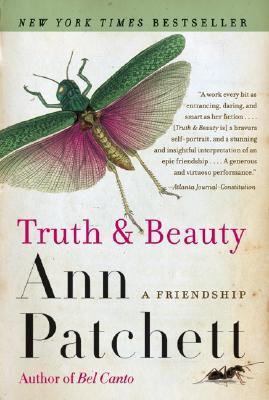
It’s not a novel but a biography of the American poet, Lucy Grealy. Ann and Lucy were friends. It’s an extraordinary friendship, forged from the power that was Lucy Grealy’s sheer force of personality. Lucy had a disfiguring and disabling condition, resulting from an aggressive childhood cancer and the grueling treatments and operations she endured all her life, in order to survive it.
I was not familiar with Grealy’s work, though I have since started to read about her more widely. Her own best known work is ‘Autobiography of a Face’. Her cancer was in her jaw and her face was permanently affected by the initial cancer and many surgical procedures she underwent to try and reconstruct her face. These were only partly prompted by reasons of wishing to look different; she also had great difficulty eating and this plus the chemotherapy she had as a child, made her diminuative – like a tiny sparrow.
Lucy died in 2002. She had become addicted to heroine and it is likely that this caused her early death aged 39.
Ann’s portrayal is vivid, very moving – though never maudlin. Later, on reading around this friendship, I learned that Lucy’s sister very strongly objected to Ann’s book about Lucy. Suellen Grealy believes that the book robbed Lucy’s family of the right to private grief. This deep rift saddened me. I don’t know who is right or if there even is a right and a wrong, but the book is very beautiful. The insights it gives you into a shining spirit, so strong and yet so damaged and fragile are very sharp. But it is the depth of the friendship between the two women that really stars.
I read that the book is described as up-lifting. I was not up-lifted by it but nor was I down-cast. I do recommend it, especially if, like me, you just love the way Patchett writes.
Next I read an old Persephone, ‘The Mystery of Mrs Blencarrow’ by Mrs Margaret Oliphant; here is the end-paper:

The Persephone volume twins this novella with another, ‘Queen Eleanor and Fair Rosamund’ in one book.
I love short stories and novellas, so this was perfect. In fact I enjoyed the second story far more than the first. They are both about marriage and written as they were in the Victorian era, they’re surprisingly modern in some ways.
I’m going to tell you what happens so if you don’t want to know, now is the moment to hide behind the sofa.
In the first, Mrs Blencarrow, wealthy, widowed, still young, and rearing a thriving, happy family in security and luxury, is introduced as a paragon of sedate and modest widow-hood. Never touched by scandal of any sort, it swiftly emerges that she has in fact re-married her trusty and far younger estate steward, Brown. But this is a dark secret known to no-one except themselves.
The secret is revealed by a plot device so silly as to make the rest of the book almost too much to go on with. Furthermore, her eventual saving from disgrace is also dependent on a scarcely explained plot twist.
The chief character, Mrs Brown as she really is, really annoyed me. She’s a rich and pampered widow with no real cares. Any grief she may have had is dismissed. She is a judgemental prudish figure – but with no grounds to judge others. In fact, I much preferred her gossipy neighbour who discovered the truth – but whose reputation was destroyed because somehow Mrs B gets away with it.
We have no idea why she married Brown, or what they felt for one another, except that she is clearly mightily relieved when he conveniently covers up the deed and then pops off to Australia.
Her brothers are simpletons, too.
The next story – Queen Eleanor etc – is much better. In a nut-shell, the 50 year old husband and father goes off the rails and bigamously marries a much younger woman in London, leaving his original and legal wife high and dry in Liverpool. The characters are much more developed and the plot does at least exist. This story is lively if predictable.
I really enjoyed the book, but I do think the plots are wafer-thin and the writer seems almost too busy to bother with properly developed stories. But read them for yourself, if only for the refreshing anti-Victorian tone that she sets in what must have been rather racy stories, in their day.
Now, I am reading ‘Cupcakes and Kalashnikovs’:
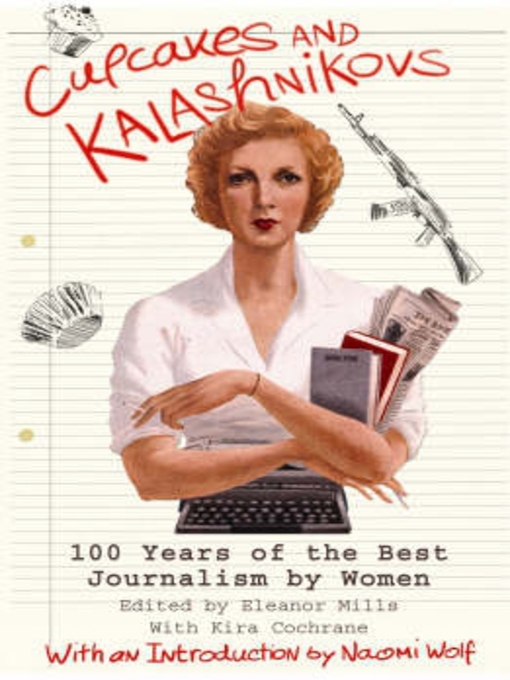
This is one of my daughter’s A level English texts. It’s a collection of journalistic pieces written by women. This entirely suits my wish for bite-sized reading when reading real, physical books. The format is clever, with sections such as war, crime, body image and so on, and then in chronological order, a series of articles are grouped. Some go back to the late 19th century; the most recent is from 2005.
It is really very good indeed.
On the audio side I just finished ‘The Perfume Collector’ by Kathleen Tessaro:
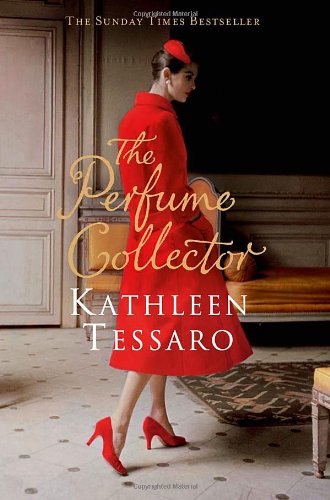
With as far-fetched a plot as you could think up, this book is as light as air, glamorous, frothy, almost Georgette Heyer-ish in parts. For the record, I was once seriously addicted to GH novels and will not hear a word against them or her. Set in London, Paris and New York in two time-zones, the author certainly has constructed a complex story (Mrs Oliphant is it most certainly not), which focuses on two lead characters who turn out to be, as you guess from about chapter 3, mother and daughter.
I loved it. It’s not great literature, but it’s well written and it just absolutely romps along, accompanied by gorgeous dresses, parties, cocktails, gambling, perfume, sex, love, money, war, families and delicious food. Feeling a bit wintry-blue? Listen to this.
I liked the last book well enough but the next one, I really loved – and it could not have been more different – ‘May We Be Forgiven’ by A M Holmes:
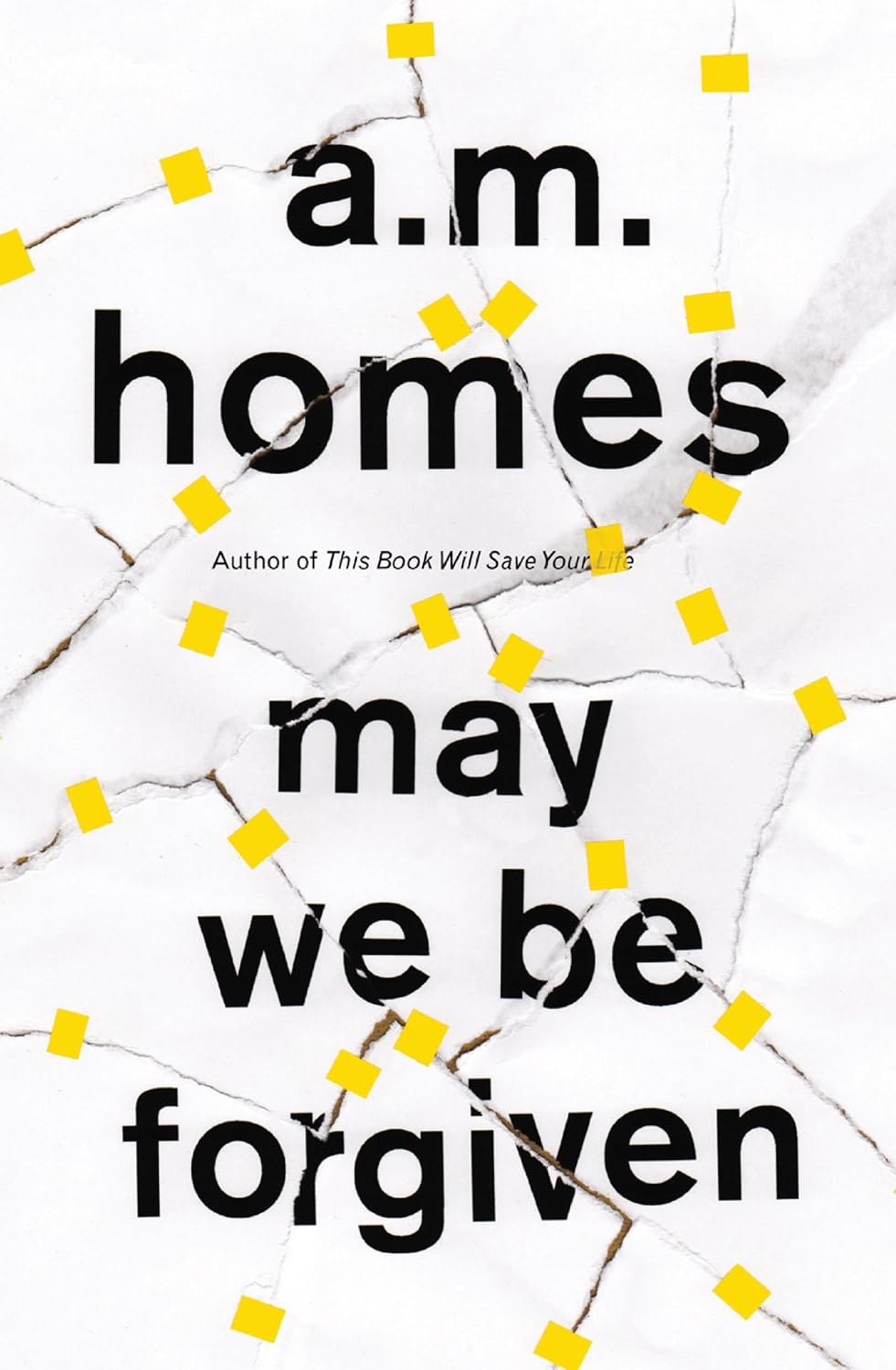
I was stunned to learn, after starting to listen, that A M Holmes is a woman. Because this book – the first of hers I have read – is told first person by a man and I was 100% sure the author was also a man.
It is a pitch-black, bone-dry novel, so darkly comic it’s painful at times. I adored it. A lengthy diatribe on modern American society, the story is very plot-driven and an impending sense of menace (well-founded in the first half of the book) pervades every single day that this book describes – and it spans 356 days, Thanksgiving to Thanksgiving – what could be more American?
The humour is exquisite, New York Jewish, dead-pan, stop-in-your-tracks funny. Not that it made me laugh out loud (LOL as The Young People say nowadays) much. It’s also very graphic – though not in a brash, pointless way – and you need to know that it contains very adult and also medical passages.
From a difficult start, which is only because it does start quite violently, I grew to absolutely love (almost) all the characters and I still miss them!
That is a sure sign of a good book. I can only remember it a few times recently, such as when I listened to ‘A Prayer for Owen Meany’ and ‘Skippy Dies’.
I am now going to read everything else this woman has written. Give it a go if you have a credit hanging about looking for a home. As a bonus it’s beautifully read and is very long.
I’m really surprised that you liked May We Be Forgiven so much. I’m part way through it and am enjoying it, but didn’t think it would be your cup of tea. It was a book club choice and most of the others didn’t like it and just wanted it to end (I’m behind as usual). They didn’t like any of the characters and didn’t care what happened to them. I’ll let you know what I think when I finish it. Next book club choice is A Tale For The Time Being by Ruth Ozeki. It is my choice next am thinking about the Morrissey autobiography – it will be a bit of a change of direction for the group!
I probably wouldn’t have ‘read’ it, but I loved it as an audio book. I’m much tougher than I was, book-wise at least…
The Perfume Collector sounds like just what I need right now. I am reading Daughters of Mars by Thomas Kenneally which is about 2 Australian sisters who go off to join the First World War effort as nurses. It’s very, very good (although the author doesn’t use proper punctuation for speech which winds me up a bit) but not particularly uplifting…