Knitting Code
Friday 18th August 2017
Recently I have been writing and editing a lot of knitting patterns. I am always doing this anyway but this year there is Knit Camp and also we have had the busiest year of teaching ever, and because I over-cater, there are usually 2 – 4 patterns for each new event. So this year I have so far designed 18 new things not counting Christmas which I have not started yet. This is paltry stuff compared to the output of a Proper Designer with a Proper Yarn House – but I do not have the software to generate patterns and if I did, I would not use it.
Anyway, Dr Donna is pattern checking my Knit Camp designs and we are almost done with them. However, there is one pattern that has a lot of ‘tech’ content and so we’ve been very focused on that. *I write the pattern. Kath and I and sometimes someone else knits the pattern. We find the bugs, I re-write the pattern, rep from * to about 2 months later…then they go to Donna. Donna edits them with pink notes. She corrects my errors, she checks all the data, she re-measures and re-states tension, and she suggests style/wording edits to make it more accessible to the knitter. As with many things, there are often several ways to express the same line of a pattern. They all add up to the same outcome, assuming the maths is right. So for example, you may get a line expressed with the use of * to end, or * to *; or it can be written in full; or you can have ( ) with a number after to give you the number of repeats.
Add to this our shorthand. Tbl, k2tog, psso, skpsso, sl1, k1, psso, tog, M1, B1, rep, cont, RS, inc(s) C6B, TL, MB and so on, with the punctuation and * and ( ) etc that goes with it. As a new knitter (stretches hands back through the mists of time) I used to ask Old Knitters: why, oh wise one, do we have all this CODE? why can they not be written in English? And the wise one would say: just look it up and shut up. Fair enough.
This week Kath and I have been wrangling a Knit Camp pattern. So there is Donna’s pink edit, then my blue edit with highlights and insertions to query points, plus hand-written calculations and notes in the margins.

This sheaf of documents was on the table when Mark came in, bearing tea. He looked at the notes. He doesn’t touch them because he knows that there be dragons in these pages but he went as far as putting on his glasses and peering. And he said:
Mark: Knitters would have made incredible code makers – or code breakers, like at Bletchley Park.
Me: They would.
Mark (looking in some bewilderment at the many hues of type, the squiggles and the abbreviations): I mean, this looks like a code.
Me: Well, it is sort of. There are lots of words in there but it is a stream of code that will equal a shawl, for example, when put into practice.
Mark: I imagine the CIA would think it was dodgy…
Me: Ummm…(think but do not say: I bet lots of the CIA operatives are awesome knitters!)
Mark (warming to his theme): They would assume it was a code within a code! Cleverly hidden coding concealed in a knitting pattern!
Me:
Mark: A plan to invade somewhere!
Me:
Mark: A knitting
army!
Me (putting down pen and rubbing eyes): Where would we invade?
Mark: Oh, I don’t know (desperate but brief mental search follows) – say, Japan!
Me: Japan?
Mark: OK not Japan. Israel!
Me: Surely, Sherlock, we’d be more likely to invade a country with a known excellence for goats, lamas and alpacas?
Mark: Why?
Me: Well, the knitting army would need supplies of fine fibres. What is the point of knitters invading a fibre desert?
Mark: Ah. OK. Peru…?
Me: Peru is a peaceful land (I think). So ‘invade’ is not really the right word. Maybe ‘visit’ would be better. ‘Visit’ and ‘go shopping’.
Mark (pointing at a long string of pink, blue and black ‘writing’ on a page): Does this say: the invasion is on tonight! Prepare and meet at dawn!’
Me (reaching for the pattern): Yes. Impressive skills.
Mark: What does it say?
Me (after short struggle with wish to make up some sorcery): It says – and I am just going to copy and paste this now for you, dear reader as it will be quicker for us both:
Row 32 (WS): With B, P1, yrn, *p2, (B1, p1) to last st before next M, p1, SM, rep from * once more, p2, (B1, p1) to last 2 sts, p1, yrn, p1. (105 sts)
Mark:
Me (sensing his disappointment): OR, in other words: we strike at dawn! Operation Thumb Gusset is GO GO GO!
This satisfies him and he leaves.
Knitters would never form an army but if they did ‘organise’ it’d be for peace. It is sad that knitters do not run the world. Peace.

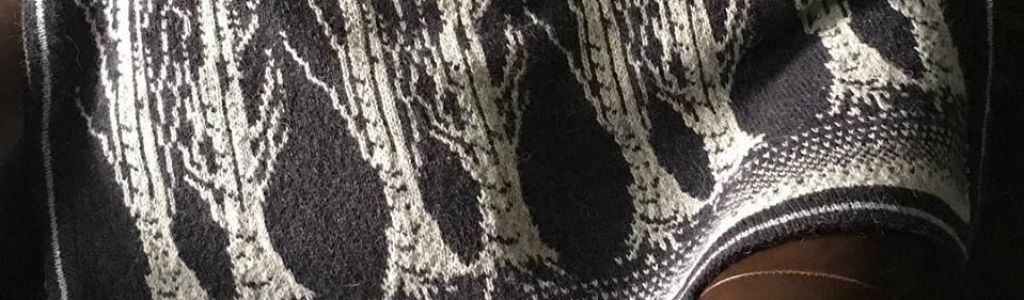
 This sheaf of documents was on the table when Mark came in, bearing tea. He looked at the notes. He doesn’t touch them because he knows that there be dragons in these pages but he went as far as putting on his glasses and peering. And he said:
Mark: Knitters would have made incredible code makers – or code breakers, like at Bletchley Park.
Me: They would.
Mark (looking in some bewilderment at the many hues of type, the squiggles and the abbreviations): I mean, this looks like a code.
Me: Well, it is sort of. There are lots of words in there but it is a stream of code that will equal a shawl, for example, when put into practice.
Mark: I imagine the CIA would think it was dodgy…
Me: Ummm…(think but do not say: I bet lots of the CIA operatives are awesome knitters!)
Mark (warming to his theme): They would assume it was a code within a code! Cleverly hidden coding concealed in a knitting pattern!
Me:
Mark: A plan to invade somewhere!
Me:
Mark: A knitting army!
Me (putting down pen and rubbing eyes): Where would we invade?
Mark: Oh, I don’t know (desperate but brief mental search follows) – say, Japan!
Me: Japan?
Mark: OK not Japan. Israel!
Me: Surely, Sherlock, we’d be more likely to invade a country with a known excellence for goats, lamas and alpacas?
Mark: Why?
Me: Well, the knitting army would need supplies of fine fibres. What is the point of knitters invading a fibre desert?
Mark: Ah. OK. Peru…?
Me: Peru is a peaceful land (I think). So ‘invade’ is not really the right word. Maybe ‘visit’ would be better. ‘Visit’ and ‘go shopping’.
Mark (pointing at a long string of pink, blue and black ‘writing’ on a page): Does this say: the invasion is on tonight! Prepare and meet at dawn!’
Me (reaching for the pattern): Yes. Impressive skills.
Mark: What does it say?
Me (after short struggle with wish to make up some sorcery): It says – and I am just going to copy and paste this now for you, dear reader as it will be quicker for us both: Row 32 (WS): With B, P1, yrn, *p2, (B1, p1) to last st before next M, p1, SM, rep from * once more, p2, (B1, p1) to last 2 sts, p1, yrn, p1. (105 sts)
Mark:
Me (sensing his disappointment): OR, in other words: we strike at dawn! Operation Thumb Gusset is GO GO GO!
This satisfies him and he leaves.
Knitters would never form an army but if they did ‘organise’ it’d be for peace. It is sad that knitters do not run the world. Peace.
Leave a Reply